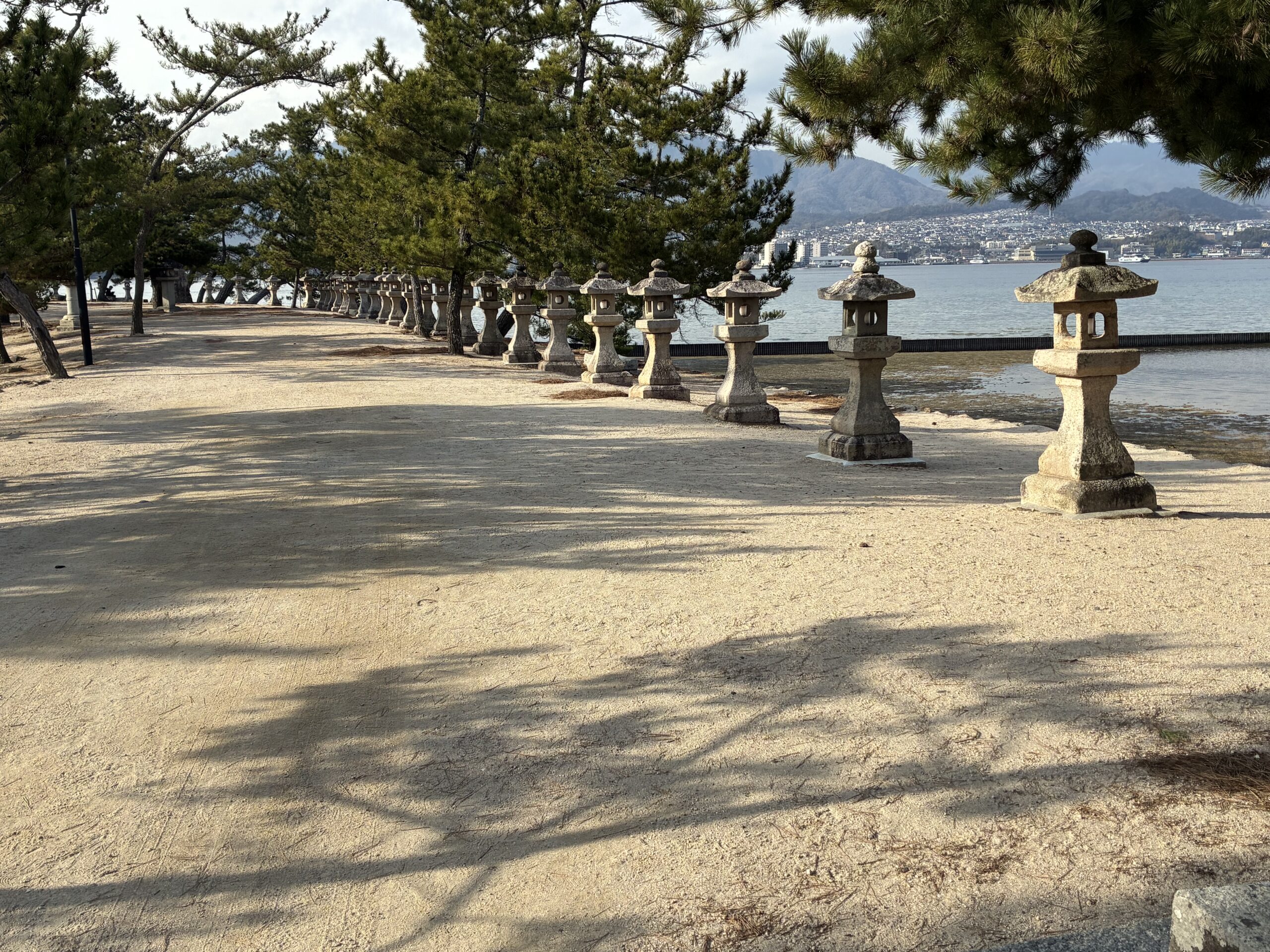
The Deer Are Already There
Before you notice temples,
before you understand where you are,
there may be a deer standing in your way.
It does not move aside.
It does not perform.
It does not explain itself.
Nothing tells you
which one should go first.
And quietly,
without instruction,
you adjust.
This is where the experience begins.
When Humans Are Not at the Center
Many experiences assume
that humans are the center.
Space adapts.
Nature is arranged.
Movement is optimized.
Japan often works differently.
Here, humans adapt to space.
Paths narrow.
Ceilings lower.
Movement is shaped.
Animals remain present.
Silence remains unfilled.
Uncertainty is allowed.
This is not about discomfort.
It is about attention.
When control softens,
attention sharpens.
Form Does Not Limit — It Concentrates
In Japan, meaning is rarely created by expansion.
It is created by narrowing.
Small rooms.
Low entrances.
Fixed gestures.
These are not decorations.
They are containers.
When choices are reduced,
attention has nowhere to escape.
Feeling appears
not despite limitation,
but because of it.
You do not enter freedom here.
You enter form.
And within form,
something precise begins to happen.
Meaning Appears as Feeling
This experience does not aim to teach.
It does not deliver concepts.
It does not offer conclusions.
Meaning appears as feeling.
Not emotion.
Not interpretation.
Feeling.
The sense of being placed
rather than placed in charge.
This is why explanation is minimal.
Too much explanation would interrupt
what is already working.
The Same Structure, Everywhere
This structure does not belong
to a single tradition.
It appears before tea is poured,
before flowers are placed,
before incense is lit,
before a body moves forward.
Different practices.
The same structure.
The most important moment
is not the visible action.
It is what happens before.
This logic extends beyond formal arts.
It exists in daily life.
Nothing is announced.
Nothing is emphasized.
It is assumed
that those present will sense it.
When the Deer Return
This is why deer matter here.
Not as symbols.
Not as attractions.
They remain inside spaces
where humans usually expect control.
They stand in the middle of paths.
They interrupt movement without apology.
Nothing explains them.
And yet, you adjust.
Not because you are told to,
but because the space
is no longer fully human.
This adjustment is not inconvenience.
It is reorientation.
Boundary Is Not a Line
In many cultures,
a boundary is a line.
Clear.
Stable.
Defended.
Here, boundaries behave differently.
They shift with tide.
They respond to season.
They soften with time.
Land and sea negotiate.
Sacred and ordinary overlap.
Inside and outside remain uncertain.
This uncertainty is not a flaw.
It is a feature.
Tide as a Teacher
The sea does not explain itself.
It does not hurry.
It does not wait.
It arrives,
and space reorganizes around it.
People do not control the tide.
They adapt to it.
This is why paths appear and disappear.
Why schedules loosen.
Why certainty is rarely promised.
Tide teaches without instruction.
It teaches adjustment.
Why This Matters Now
In a world designed
to respond immediately to human intention,
this experience does something rare.
It asks nothing of you.
It does not demand productivity.
It does not reward speed.
It does not confirm identity.
It simply removes the assumption
that you are at the center.
And in that removal,
feeling returns.
Notes Shared Only Here
(Not Explained On Site)
In ancient Japan, deer were observed closely.
Because they shed and regrow their antlers each year,
they became associated with renewal.
Their behavior was believed to reflect
changes in weather and unseen disturbances.
For this reason, deer were regarded as mediators —
not gods themselves,
but beings moving between forces
humans could not fully perceive.
Zen works in a similar way.
It does not transmit ideas.
It creates conditions
where direct experience becomes unavoidable.
Understanding is not given.
It arises.
Yōmeigaku (Yangming learning) holds
that knowing and acting cannot be separated.
You do not act because you understand.
You understand because you have acted.
These ideas are not required for the experience.
They are shared here
so that if something feels familiar,
you do not need to name it.
Nothing here needs to be remembered.
Further Reading (Optional)
Everything you have read here
is complete on its own.
The books below are not required.
They simply continue
the same way of paying attention,
in a different form.
If you choose to stay with this way of seeing,
they remain available.
The Walk
This experience follows the same logic
described above.
You are not guided toward conclusions.
You are placed inside a condition.
The form does not move for you.
You move within it.
Without instruction.
Without explanation.
If you choose to experience this in person,
the walk is available here.
Closing
Everything you have read here
is complete.
Nothing needs to be added.
Nothing needs to be remembered.
If you continue,
the books remain.
The walk remains.
If not,
what mattered
has already happened.